








For many, the arrival of GLP-1 receptor agonists felt like the end of a lifelong battle with weight. When Mercedes, a retired teacher in her 50s living in Canada, received approval for these treatments in 2024, she was overcome with emotion. She recalled crying in her doctor’s office for a week, believing that her long-standing struggle with weight and the associated shame were finally coming to an end.
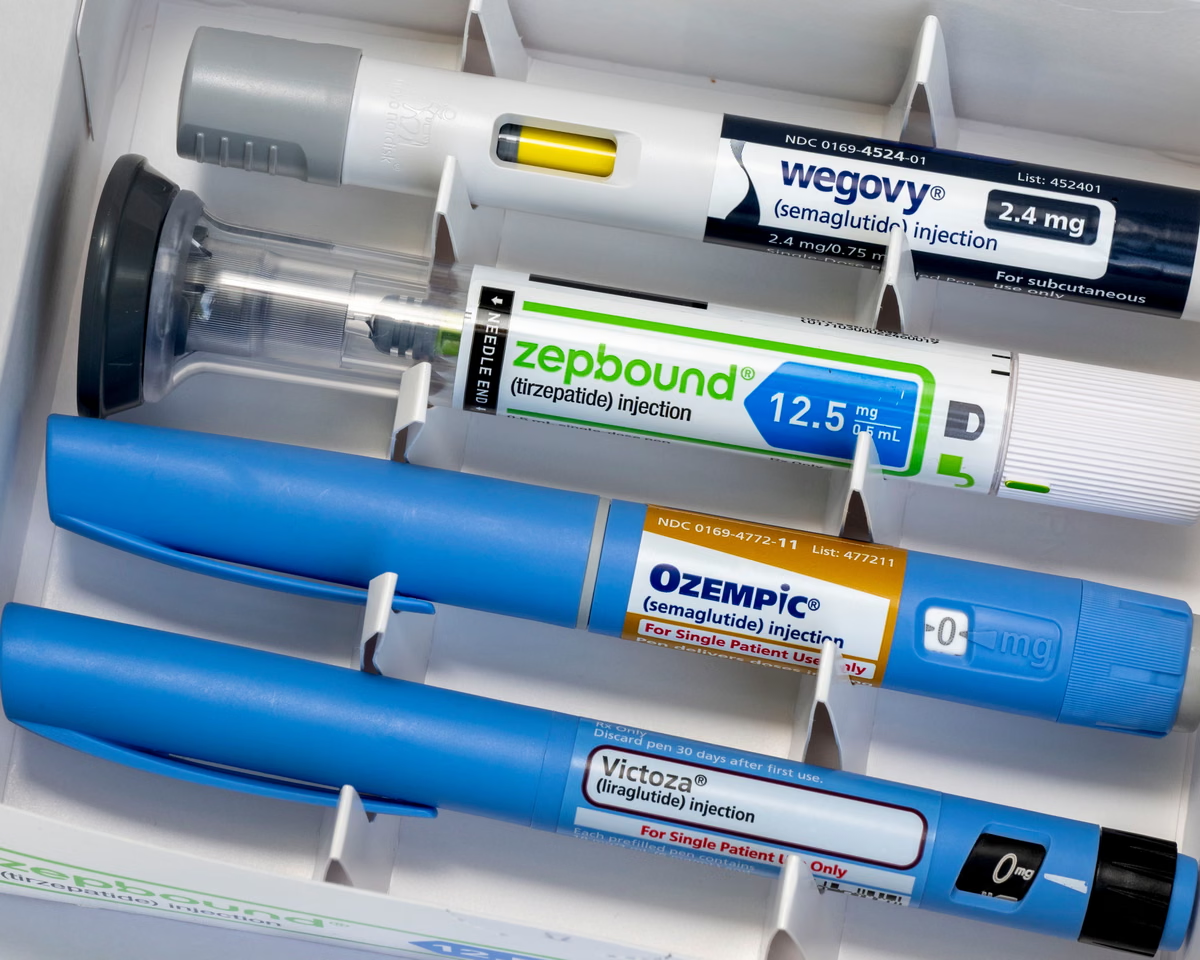
However, that initial hope gradually eroded as the medications failed to produce results. Over the following months, Mercedes cycled through several treatments, including Ozempic for nine months, Wegovy for four months, a stint on Contrave, and a few months on Mounjaro. Nine months ago, she transitioned to Zepbound. Despite these efforts, she stated, “Nothing has worked.”
Mercedes is part of a small but significant group of patients for whom these high-profile drugs, often celebrated for their transformative effects, prove ineffective. While clinical trials suggest that GLP-1 medications can help users lose between 15% and 20% of their body weight, the reality for others is starkly different. Depending on the specific drug and dosage, between 9% and one-third of trial participants lose less than 5% of their total body weight.
The emotional toll of this non-response is substantial. Mercedes described the experience as incredibly damaging to her self-esteem, noting that the financial cost of the drugs only compounds the frustration. She struggled to maintain lifestyle changes, finding that the medications failed to silence the constant, intrusive thoughts about food. She described her cravings as being “like heroin withdrawal,” and while she managed to lose 20 pounds in one month through sheer willpower, she emphasized that this was achieved without the aid of the medication.
Experts stress that this lack of efficacy is not a failure of the patient. Prof. Alexander Miras, an obesity expert at Ulster University, explained that if a drug fails to reduce hunger and food intake, it is not the patient’s fault. He noted that while non-response is not common, it is a documented phenomenon. He added that factors like motivation, intelligence, education, and socioeconomic status do not predict how a patient will respond to these treatments.
Other patients share similar experiences. Yury K., a 57-year-old from Canada, reported no meaningful weight loss after six months on Wegovy, despite maintaining a strict exercise regimen with kettlebells and a controlled diet. While he noted minor improvements in blood sugar and cholesterol, the scale remained stagnant at 242 lbs. Similarly, 53-year-old Lucille from Luxembourg, who has used GLP-1 medications for four years, found that even after switching to the highest dose of Mounjaro, the drugs eventually stopped helping her lose weight entirely.
Researchers are now working to identify why these variations in response occur, with the goal of tailoring future treatments to improve cost-effectiveness and reduce side effects. Current research indicates that biological factors, rather than behavioral ones, are likely at play. Prof. Miras noted that age and sex are significant variables, with older individuals and men generally seeing less weight loss. Furthermore, studies have suggested that ancestry may influence outcomes, with medications showing higher efficacy in individuals of European ancestry compared to those of African American ancestry.
Dr. Mahesh Umapathysivam, an endocrinologist at Adelaide University, highlighted the potential role of hormones. There is growing evidence that estrogen levels influence the body’s response to GLP-1, which may explain the differences observed between male and female patients. He noted that the use of menopausal hormone replacement therapy, which contains estrogen, is associated with greater weight loss in semaglutide users.
Genetics also appear to be a key piece of the puzzle. Recent research has identified a specific genetic variant that affects the brain receptors targeted by these drugs. Individuals carrying this variant have been found to lose approximately 0.76 kg (1.6 lbs) more on average, with those carrying two copies of the variant seeing even greater results. As scientists continue to map these biological markers, the hope is to move away from a one-size-fits-all approach to obesity management. The report also notes that she broke down, w hen Mercedes was told by her doctor that she could be prescribed GLP-1 weight loss jabs in 2024. The report also notes that “Finally, after being overweight my entire life, this was going to save me. The report also notes that ozempic, a type 2 diabetes medication, and Wegovy, which is licensed for weight loss, both contain a drug called semaglutide that mimics a hormone that occurs naturally in our bodies: GLP-1. The report also notes that suppresses appetite and increase the production of insulin – meaning many people lose weight, these medications reduce the rate at which food is emptied from the stomach. The report also notes that with clinical trials suggesting they can help participants lose an average of 15% to 20% of their body weight, the excitement around such “GLP-1s” has been hard to miss: the medications have grabbed headlines. The report also notes that studies suggest they could help with conditions ranging from heart problems and addictions to fatty liver disease.