








The United States Supreme Court has cleared the way for the Trump administration to resume construction of a border wall through a remote, ecologically diverse section of Big Bend National Park in West Texas. In a decision issued Monday, the justices granted an emergency request to vacate a lower court’s injunction, which had effectively halted the project during ongoing litigation.
The court reasoned that the prior injunction “impedes the Government from advancing its ‘compelling interests’ in border security and integrity.” This project remains a central element of the administration’s broader immigration platform, often characterized by the president’s 2016 campaign promise to “Build the wall!” For instance, he rallied supporters with chants of “Build the wall!”, during his first successful bid for the presidency in 2016.
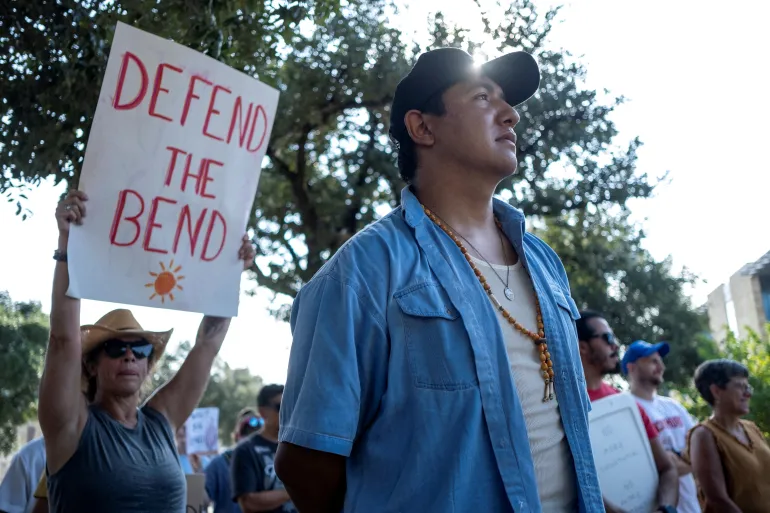
This initiative has drawn significant opposition from conservation groups, local residents, and even some within the Republican Party. Opponents argue that the construction threatens a landscape home to endangered species, including the Mexican long-nosed bat. The administration, however, maintains that the Big Bend region serves as a critical artery for unauthorized border crossings and illicit drug trafficking. The lawsuit challenged waivers used by the agency to fast-track border construction and sidestep environmental and conservation laws.
In October, US District Judge Kathleen Cardone had initially blocked the construction. Her ruling highlighted that although the Big Bend sector accounts for over 25 percent of the US-Mexico border, it represents only 0.3 to 2.2 percent of total migrant apprehensions. She noted that applying waiver authority here would imply it could justify construction across the entire border.
The Supreme Court concluded that the government is “exceedingly likely to prevail” on jurisdictional grounds. The ruling centers on the 1996 Illegal Immigration Reform and Immigrant Responsibility Act, which limits the power of lower courts to review border barrier projects unless they involve direct violations of the US Constitution. The court stated that the challengers’ arguments did not meet this criteria, noting “there is no such thing as a ‘constitutional’ major-questions claim.” District courts can only hear claims alleging a violation of the US Constitution, under that law.
Justice Ketanji Brown Jackson stood as the lone dissenter, indicating she would have denied the administration’s emergency petition, though she provided no further explanation for her position.
The legal challenge was led by the Center for Biological Diversity, alongside Friends of the Ruidosa Church and a private landowner. Their lawsuit specifically targeted the Department of Homeland Security’s use of administrative waivers to bypass federal mandates, including the Endangered Species Act, the National Environmental Policy Act, and the National Historic Preservation Act.
Plaintiffs had argued that without these regulatory hurdles, the construction would permanently alter one of the most remote and significant landscapes in the United States. Following the Supreme Court’s intervention, the government is no longer bound by these environmental compliance requirements as the wall project proceeds.