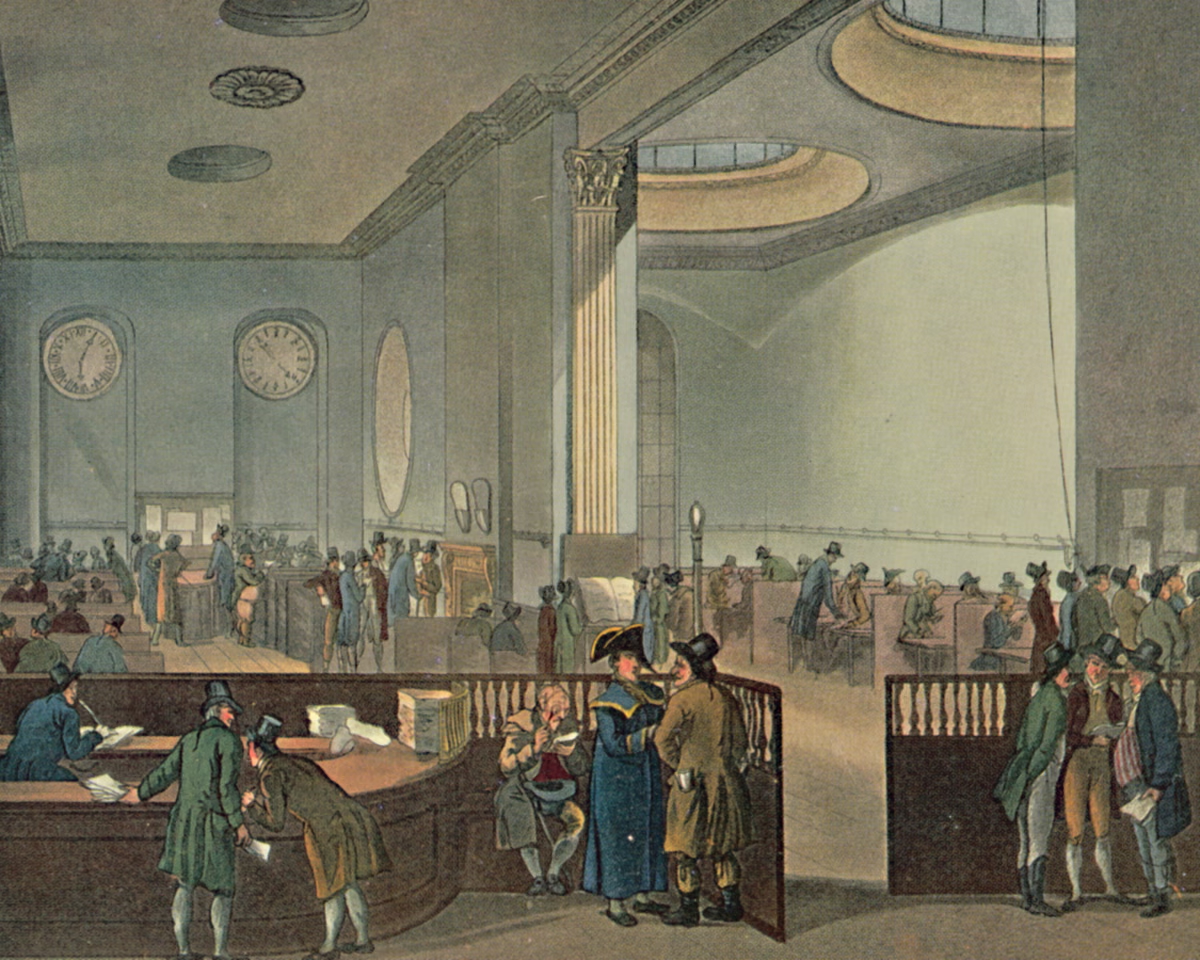










While the UK government weighs a formal apology for Britain’s historical involvement in the transatlantic slave trade, Lloyd’s of London issued a “deeply sorry” statement six years ago. The historic insurance marketplace expressed deep regret for the significant part it played in trafficking enslaved people and the immense suffering that resulted, later installing a plaque at its London headquarters.
Subsequent independent research conducted in partnership with Johns Hopkins University by academics Alexandre White and Pyar Seth utilized Lloyd’s archives. Their Underwriting Souls project revealed that merchant insurers—some connected to predecessor entities of modern insurance firms—provided coverage for vessels transporting enslaved individuals across the Atlantic, and in certain instances, insured the captive people themselves as commercial cargo.
Specialist publication InsuranceERM featured interviews with historians indicating that the insurance sector’s complete historical entanglement is far from fully understood. White, currently an assistant professor at the University of Cambridge, pointed to fragmented surviving documentation as a primary obstacle for researchers attempting to trace these financial webs.
Risk ledgers detailing individual underwriting transactions remain scarce, offering only isolated glimpses into underwriters’ operations. White noted that substantial additional evidence could potentially exist, though much may have been lost over time or intentionally destroyed. Risk books, the ledgers in which individual underwriters recorded their business, are particularly rare and provide only a snapshot of an underwriter’s activity.
Despite these archival gaps, researchers are gaining clearer insights into the financial magnitude of insurance within the slave trade through ongoing investigations across London, Liverpool, and Bristol. In Liverpool, the Lloyd’s Register Foundation is backing a one-million-pound initiative titled the Connector Project, facilitated by National Museums Liverpool, to uncover fresh evidence.
As part of this effort, PhD student and research associate Lucy Moynihan analyzed the 1797 risk ledger of John Gladstone, a merchant and enslaver who later served as the inaugural chair of the Liverpool Underwriters’ Association. Moynihan’s findings identified previously unrecorded voyages linked to the slave trade within Gladstone’s ledgers.
Project manager Malik Al Nasir emphasized that Liverpool’s merchants, bankers, shipowners, and underwriters operated within interconnected familial and commercial networks. Because merchants frequently functioned as underwriters, crucial documentation often remains stored within private family and corporate collections, prompting calls from researchers for private archives to grant public access.
Al Nasir’s independent investigations, which involved sourcing scattered documents and online marketplace items due to gaps in official repositories, uncovered a reference letter concerning the insurance of a sloop named Speedwell that does not appear in the standard Slave Voyages database. “If I can just find randomly from one letter one slave ship that’s not mentioned on the Slave Voyages database, then there must be many others as well,” he said.
Historians also suggest that insurance involvement persisted after Britain abolished the transatlantic slave trade in 1807. Columbia University associate professor Hannah Farber noted that British insurers openly maintained financial connections to foreign slave voyages following the ban. A deeper examination of the research and what it means for insurers can be found in the InsuranceERM podcast episode, Why insurance’s reckoning with the transatlantic slave trade is far from over, released on 10 Novembe.
As enforcement measures increased, financiers adopted covert methods to back slave voyages without traditional underwriting arrangements, demonstrating that suppressing insurance mechanisms proved considerably more complex than intercepting ships. Farber stresses the need for further research linking financial hubs in London, Liverpool, and New York with Brazil and Cuba, where enslavement persisted later into the nineteenth century. Perhaps more consequential was the research that followed.
Analysis of historical records further demonstrated that the insurance framework categorized enslaved human beings purely as financial assets, extracting economic value from African lives through their labor, bodies, and even mortality.
Following its initial apology, Lloyd’s pledged fifty-two million pounds, allocating twelve million pounds toward Inclusive Futures programs designed to support Black and ethnically diverse career progression from education to corporate leadership. An additional forty million pounds was earmarked for profit-seeking investments directed toward the African Development Bank and the Inter-American Development Bank.
These remedial measures drew criticism from academic Kehinde Andrews, who characterized the response as inadequate. Meanwhile, the Runnymede Trust acknowledged the institution’s acknowledgment of its history but urged further action regarding internal pay disparities. According to the race equality thinktank the Runnymede Trust welcomed Lloyd’s work to acknowledge its history but, It needed to do more to address issues such its ethnic pay gap.