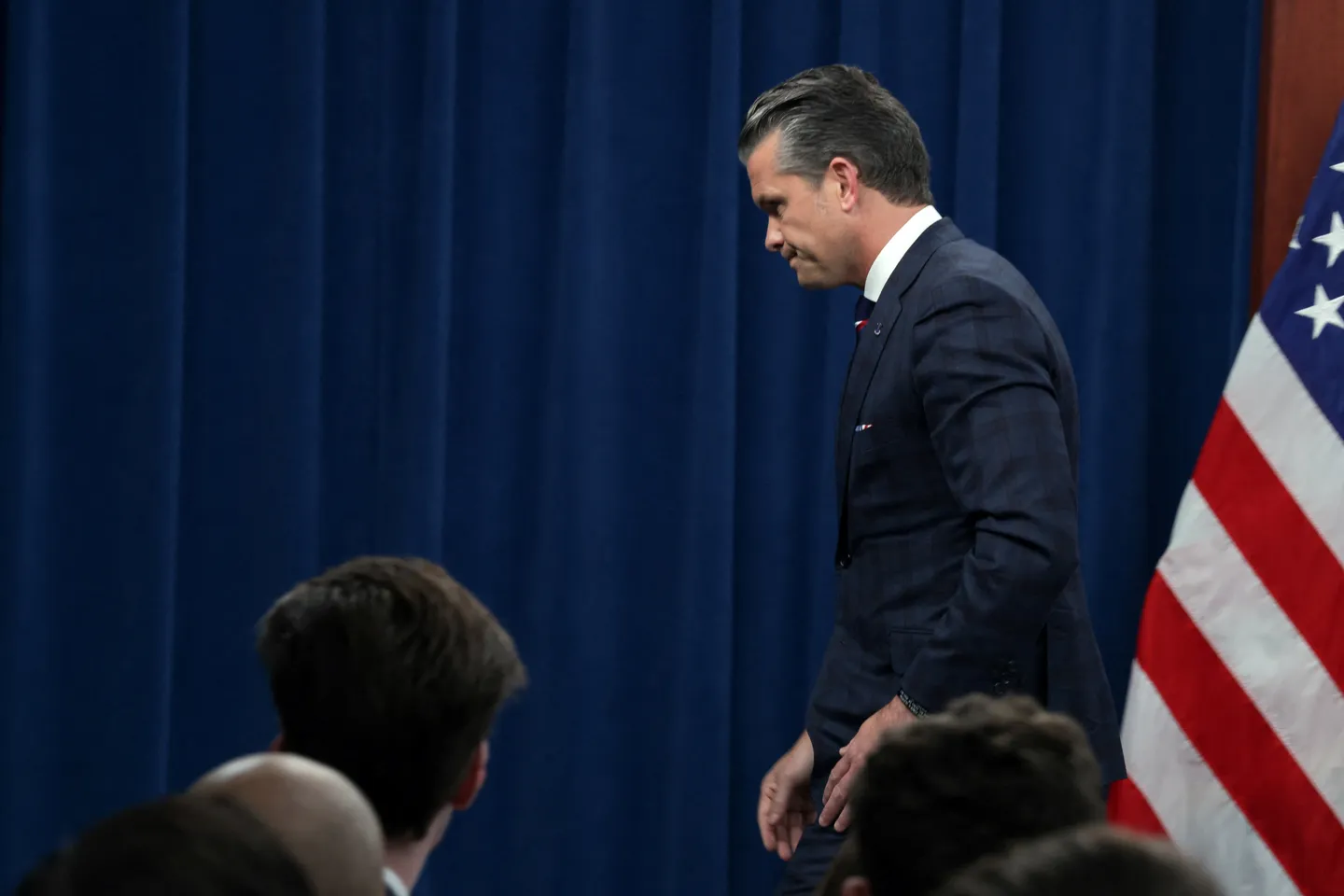









US Secretary of Defence Pete Hegseth has narrowly survived an impeachment attempt in the House of Representatives, yet the political instability surrounding his leadership remains profound. On November 10, the Republican-controlled House voted 211–204 to refer eight articles of impeachment against Hegseth to the Judiciary Committee, a move that effectively shelved the proceedings for the immediate future.
Despite this legislative reprieve, the Pentagon chief remains under immense scrutiny regarding the ongoing Iran war and the broader direction of the US military. While the Trump administration maintains its public backing, analysts warn that Hegseth’s position is increasingly fragile. Geopolitical expert Dan Steinbock describes the secretary’s current status as being in severe jeopardy, citing behind-the-scenes questioning from President Trump regarding his continued viability. Military analysts see serious deficiencies in Hegseth’s management style in the Pentagon, a crucial American institution in extending American influence across the globe, beside Hegseth’s failure to understand dynamics of the Iran war.
Steinbock characterizes the appointment of Hegseth as a significant miscalculation, arguing that he was the wrong choice at a critical moment.
The war against Iran, which officially began following joint US-Israeli strikes on February 28, is viewed by many military observers as inconclusive. In a conflict widely described by critics as a war of choice, the Trump administration ultimately decided to launch strikes against Iran alongside Israel on February 28.
Although the administration claims the conflict is being won, external experts suggest the campaign has devolved into a strategic disaster that has failed to secure vital maritime channels like the Strait of Hormuz, causing substantial global economic turbulence. Some administration insiders and experts suggest that Hegseth might not remain in office until the end of the year. “Hegseth is a terrible strategist who failed to balance ends-ways-means (an achievable objective-how to do it-using the resources available).
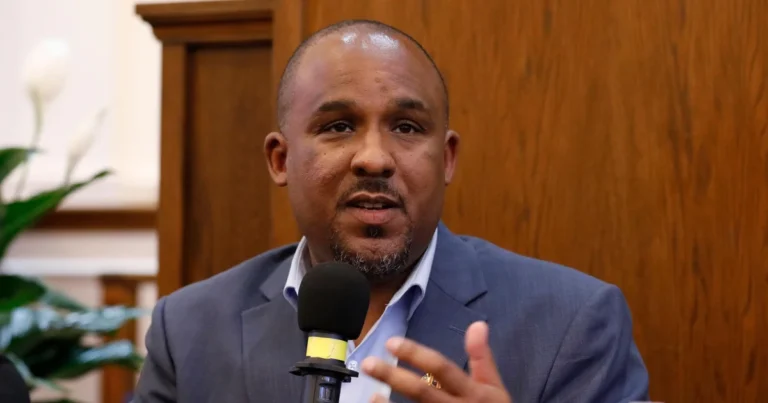
The political cost of retaining Hegseth may eventually outweigh the benefits, according to analysts. Figures such as Vice President JD Vance have shown increasing skepticism toward the war’s trajectory and its economic impact. Military analyst Ozgur Korpe suggests that while Trump may continue to support his secretary in the short term, the political and economic pressures—coupled with rising living costs—make an eventual departure in the coming months highly probable. Particularly potential presidential contenders such as Vice President JD Vance, come to view him as an obstacle to retaining the White House in 2028, analysts say, hegseth could become a political liability for the Trump administration if Republican leaders. According to “Any given leader will protect those in their inner circle only as long as the political cost of doing so remains manageable, “, Ozgur Korpe, an academic at National Defence University, and a military analyst, citing political scientist Bruce Bueno de Mesquita’s “selectorate” theory, which studies relations between political survival strategies and economic realities. According to unlike famous military theorist Carl von Clausewitz’s analysis, which, War is the continuation of politics by other means, Hegseth’s Iran conduct has not produced a political outcome neither in the form of a reg. Hegseth maintains that the high-level departures are not politically motivated but are “long overdue” as part of his efforts to remove what he calls “woke” elements from the US military. Erickson, however, argues that experienced and capable senior officers were removed “for politically motivated reasons” because they were “highly educated professionals who told Hegseth the truth rather than providing him with politicised biased positions.”. Compromising the country’s “basic national security”, he warns that the dismissals have damaged the military’s “strategic cohesion”.
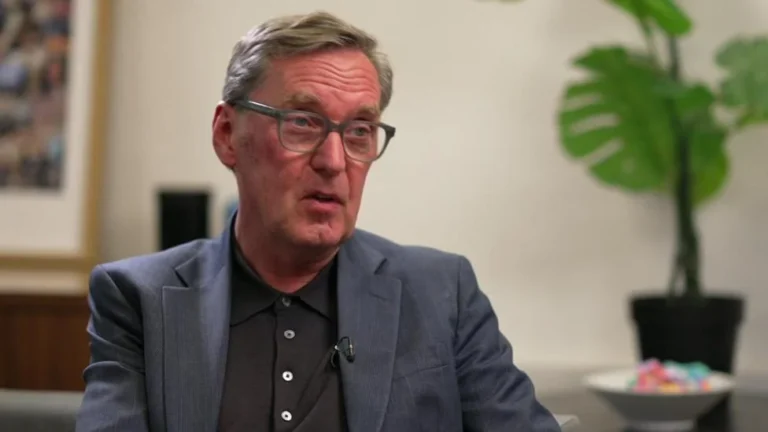
Hegseth’s management style has drawn sharp criticism from military historians. Retired US Army officer Edward Erickson noted that Hegseth manages the Pentagon, a global entity with operations in 80 countries, as if it were a small, retail-focused business. Erickson argues there is no evidence the military has strengthened under his tenure, noting that depleted missile inventories for air defense have left the country in a more vulnerable position. Hegseth operates a trillion dollar global corporation with ‘branch offices’ in 80 countries and he runs it like a small business. He ‘thinks retail when he should be thinking wholesale’,” Edward Erickson, a leading American military historian and a retired US army officer, tells. “There is no evidence that the US military is stronger today than in 2025. According to arguably, US missile inventories are so depleted that a strong case can be made that the US is weaker,”, Erickson, referring to how the military’s crucial air-defence munitions have run out of their stocks due to the Iran war. “These operations seem to violate international laws of war and set a bad precedent for the future.”.
Concerns have also been raised regarding Hegseth’s ideological influence within the Department of Defence. Critics allege that his decisions are driven by apocalyptic Christian-Zionist beliefs, which they argue should have disqualified him from such a high-ranking position. These concerns are compounded by reports of extremist rhetoric within his office; Ryan Higgins, Hegseth’s senior adviser for religious affairs, has allegedly shared content on social media labeling Muslim cultures as barbaric. Hegseth, whose extremist Christian beliefs have drawn scrutiny, reportedly played a significant role in persuading Trump to attack Tehran, promising a swift victory comparable to the capture of Venezuelan leader Nicolas Maduro in January. He accused critics and those seeking his impeachment of pursuing “ideological agendas”, at a recent press briefing.
Internal morale is reportedly suffering, as many senior military officials are dissatisfied with Hegseth’s focus on cultural issues and his views on minorities.
The secretary has faced backlash for his “ending the war on warriors” campaign, which analysts argue has prioritized political optics over institutional stability. “On the contrary, I believe there is an institutional erosion taking place.”.
Since he assumed office, more than 20 generals and admirals have been dismissed or forced to resign, a trend that critics argue has eroded the strategic cohesion of the armed forces.
As the administration continues to face mounting damage to facilities across the Middle East, including in Jordan and northern Iraq, speculation grows about a potential reduction in US presence across Arab Gulf nations. With no clear exit strategy or political resolution in sight for the conflict with Tehran, the pressure on Hegseth is expected to intensify as Republican leadership weighs the risks of his tenure ahead of the 2028 election cycle.