







Violent territorial clashes between Ethiopia’s Oromia and Somali regional administrations have forced more than 50,000 people to flee their homes, with many seeking refuge across the border in Kenya. The crisis, rooted in long-standing disputes over land and administrative control, intensified around October 18, triggered by rising tensions over the display of a regional flag in the contested Moyale area. Reflecting competing claims over territory and authority, tensions escalated around October 18 over the raising of the Somali regional flag in the disputed Moyale area. The response is also under way inside Ethiopia. The politics are secondary to the immediate question of where they will sleep and what they will feed their children, for those arriving in Kenya.
Hawa Hassan, one of the many forced to escape the violence, described a harrowing journey to Kenya. She recalled her home being burned and witnessed the shooting of a 13-year-old girl, an incident she noted occurred despite the girl having no involvement with any flag displays. Her account of the killing remains unverified amid the ongoing chaos. But one memory has stayed with her: a 13-year-old girl shot while sitting near a wall.
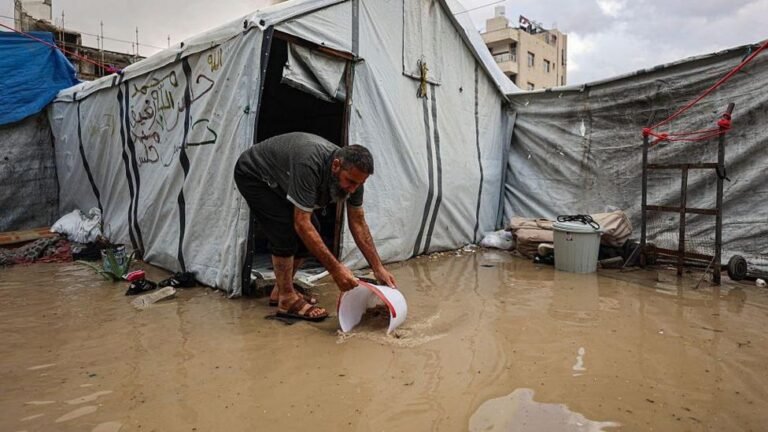
For those reaching the Kenyan side, survival has become a daily struggle. Hassan reported that families arrived destitute, lacking even basic necessities like food, cookware, or bedding. Conditions are dire, with reports of women giving birth while in transit and newborn infants forced to sleep on bare floors. Humanitarian concerns are mounting as families live in overcrowded conditions, leading to the spread of diarrhea and fears of malaria outbreaks. While families feared malaria as mosquitoes multiplied, diarrhoea was spreading.
Official assessments highlight the scale of the displacement. A multi-agency government survey conducted between October 29 and 30 estimated that 35,950 people had been uprooted by October 24. While earlier figures suggested about 25,000 people were staying with host families and 11,000 were in temporary sites, the Kenya Red Cross now indicates the total displaced population exceeds 50,000, including those integrated into local households. According to during a meeting, Kenya Red Cross regional head Malik Adan, The number of people displaced by the conflict had increased from an estimated 36,000 to more than 50,000. The assessment covered 758 households and involved government authorities, United Nations agencies, the Kenya Red Cross and other humanitarian organisations. The figures reflect different reporting periods. According to he, Perceptions of Oromo expansionism and allegations of federal government support for Oromia’s regional leadership risked deepening mistrust. According to kanja, About 10,000 people were staying in temporary shelters and public institutions, while others had been taken in by host families. Now we are literally taking care of two towns together,” he told.
The impact on Kenyan host communities is severe.
Local families, already resource-constrained, are attempting to support the influx, but many are reaching their breaking point. Abdi Maalim, a member of the local peace committee, noted that residents who previously supported only a few displaced individuals are now struggling to feed groups as large as 20 or 30, with some locals relocating further inland due to stray ammunition landing in their neighborhoods. In Kenya, residents who initially opened their doors are finding it harder to keep going. Families that once cooked for five or six people are now feeding 20 or 30. According to traders, Price rises of about 20 percent as supplies became harder to move. The harder it will be for those communities to keep absorbing the cost, the longer the fighting continues.
Economic life in the border town of Moyale has also ground to a halt. Trade between Mombasa and Addis Ababa has been disrupted for nearly two weeks, with trucks stranded and local businesses slowing down significantly. The closure of banks has halted the circulation of Ethiopian birr, causing prices for essential goods to climb by roughly 20 percent.
The Ethiopian Red Cross has launched a separate relief operation, distributing emergency supplies—including 2,000 tarpaulins, blankets, and kitchen sets—worth approximately 30 million Ethiopian birr ($182,970) to about 1,000 displaced households on the Ethiopian side of the border. The supplies included 2,000 tarpaulins, blankets and sleeping mats, as well as dignity kits, jerrycans, kitchen sets, soap and solar lamps.
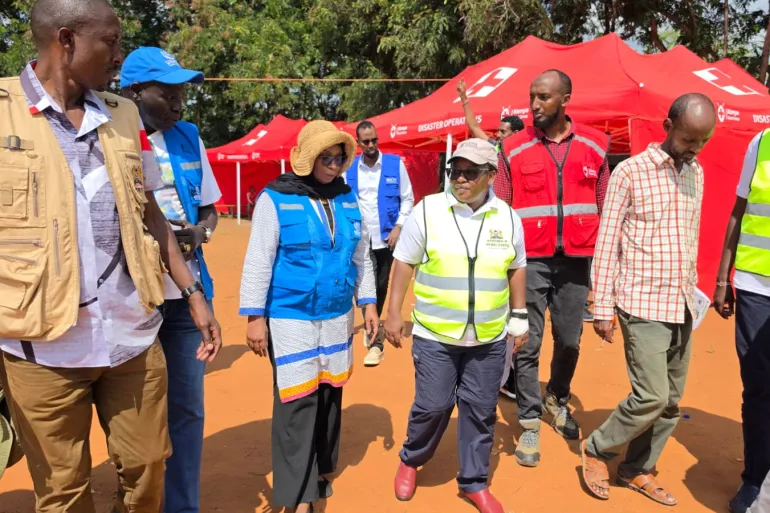
On the Kenyan side, government authorities are coordinating with the UNHCR to register arrivals. However, Mwasaru Mercy, the acting commissioner for refugee affairs, noted that no contingency food stocks were prepared for such a sudden incident. The absence of an established refugee camp, necessitated by the volatile security situation, complicates efforts to provide consistent aid.
The security risks have drawn the attention of top officials. Kenya’s Inspector General of Police, Douglas Kanja, visited Moyale on November 5 and announced plans to bolster border security through increased deployments. Authorities have confirmed casualties on both sides, including at least one Kenyan and one Ethiopian who died from gunshot wounds sustained in the crossfire.
Security analyst Dr. Abdiwahab Sheikh Abdisamad warned that the clashes represent more than a localized dispute, reflecting deeper ethnic tensions and political competition. He cautioned that the spillover of armed fighters and persistent stray fire presents a significant security challenge for Kenya, necessitating urgent high-level diplomatic engagement between the Kenyan and Ethiopian federal governments.
Humanitarian agencies, including the UNHCR, continue to appeal for a ceasefire to stem the flow of refugees. As gunfire remains audible in the border region, the priority remains the immediate protection and sustenance of thousands of families currently dependent on the goodwill of local residents and international aid, pending a return to stability. For many, crossing the border has meant escaping gunfire only to face another struggle: finding food and shelter.